"Good Bye Lenin! (2003)" is one of the most studied German films (along with "Das Leben der Anderen (2006)") of the last decade. Identified as an important work for its "Ostalgie" theme, it has a distinct grief perpetuating through out. Its narrative is strewn with details about life in the erstwhile GDR, which I have tried to present here with screenshots. It uses a lot of real footage concerning the fall of the Berlin wall followed by the unification. On a casual first viewing, the following images (the "trabant" as the GDR icon and the "Coca-Cola" for the political transition in the region, for example) struck me. It is a very sad film, hiding all its regretfulness with an ironic comic face.
A man who is reading a classic will find a way to work it into his conversations. ~Unknown
Monday, August 20, 2012
Monday, August 13, 2012
Madhubana Kadai (2012)
Madhubana Kadai (MK) transcends the conventional tamil cinema narrative, as in it doesn't have a form - it holds no premise, no beginning, no building-up of a plot, no interval cut and no climax. The characters emerge from nowhere and then they are lost in some time, of course apart from a few who occupy the entire script. The script works more like, the dirty wine shop with its alcohol supplies, is the central character and the people who visit it are peripherals at the most. In the hindsight, it looks like it could have worked only this way.
MK had a lot of Bala-esque scope for instilling emotions and drama, but it decided not to. It takes no moral stance and it's no propaganda engine, the most it did is to disperse several satirical elements which can be labelled "political" statements. The film is set in Erode-Perundurai locales and shows in heart and blood, a single day in the life of a TASMAC wine shop. The wine shop is visited by people from all walks of life and occupations and is the center of a lot of political discussions, social skirmishes, drinking as social status elements etc.
The tamil society (big cities should be exceptions) with all its self-righteous moral-policing is still devoid of genuine social hang-outs. That is where the relevance of so many cinema halls and TASMAC outlets emerge. Cinema theaters and toddy shops are the only centers of catharsis (in the sense of emotional outlets) for the working class (Women are limited to only cinema and neighborhood gossips I suppose). Hence these are centers of social equality, that even the all-pervasive casteistic hierarchy has to stay away from them. The film quite correctly references this as "Samarasam Ulaavum idame". MK is the confluence of cinema and liquor in that sense.
For me, the last three minutes of the film made a huge impact out of nowhere. It featured the social angst of a dalit sewage drain cleaner in quite some details. I mean, I don't remember the last time a main-stream tamil feature film spoke about this issue. The scene was quite inconsequential from the script's POV but it did make a profound political statement. That is why this film is special, it didn't attempt to have an agenda but then made a spontaneous go at issues like this. A second viewing would certainly help I suppose.
MK makes a mockery of the drinking culture in a typical tamil society. TASMAC is one of the largest money spinners and is a source of humongous revenue for the state. When the state handles the alcohol industry, it becomes just another object of political & monetary greed and the film rightly presents the case of "duplicate liquor" and gross mismanagement of the infrastructure of the industry. Drinking is thus not a source of bacchanalian pleasure here as it should be.
PS: The film is inspired by this Nanjil Nadan essay (as in the credits), which offers a brilliant read.
Monday, July 2, 2012
Tut mir leid, Ich bin auch tourist ...
Not knowing the language and still being a part of the social setup, is a bizarre feeling. To be shut out of random conversations in local trains, not being able to help somebody who actually trusted you and asked directions to a place, not to be in a position to explain what you want while you shop at the super market, and above all - disability to imbibe the popular culture viz. magazines, news papers, cinema, theater, music etc - It's so awkward. The complexity of the language under question only bolsters my pessimism that I will never be able to keep a conversation in German in the near future. Sometimes I have this imagination that I am a hapless new-born totally unaware of what is going on around me, except for the fact that kids hear and lip-read so fast and master a language really quick. The perils of swallowing a language so late in life is the inability to "get" it in German (for example) without taking the English route -- (i.e) German word - translate into English - write into the memory, and vice-versa. The word-picking rate gets drastically down this way.
There is a general tendency in us - In a conversation, when somebody discusses things with words that we don't know, it tends to turn us off and we start to perceive the conversation as "boring". Starting to learn a language comes with this warning - each and every word that a native speaker utters is going to be new and to actually fight that ineptitude and somehow boost the learning curve takes some confidence and eagerness. Recently I had this plan to inculcate that eagerness by feeding my imagination about German culture, history and sociology (Ostalgie and Vergangenheitsbewältigung, to name a few). To actually develop a sense of taste towards a language that is not your mother-tongue is not an easy thing. English with its all-pervasive nature and India with its colonial fixations got it into us even before we realized. To artificially drill German into one's self thus is a Herculean task. Being away from the mother-land for so long generally sickens the intensity of the nostalgia for my "own" language, "own" music, "own" cinema and "own" everything. Inability with German is just another conflict within the self.
PS: The title of the post means - "I am sorry, I am a tourist" (in German).
Tuesday, June 19, 2012
Vazhakku Enn 18/9
Not a review - Some random thoughts.
Vazhakku En 18/9 (VE) ends with an epic climax - Jothi splashing caustic acid on a police inspector's face in the court premises. The scene symbolizes, in addition to many other connotations, the well-channelized angst of a commoner towards the system (law & order and the judiciary). This is quite characteristic of the late 70s and 80s Indian middle cinema of say - Mrinal Sen, Govind Nihalani or Shyam Benegal, wherein the common man questioning the system had frequently been the central theme. One such instance stand out for me - almost forty years back, Shyam Benegal's Ankur (1974) ended with a scene that is marked as the beginning of Indian parallel cinema. It had a young boy pelting a stone at a glass window and running away as the sound of the shattered glass resonates in air. It was remarked as the first stone of resistance against the casteistic and feudalistic setup of the neo-socialist India (of the 60s). VE definitely makes a more harsh statement - with acid.
VE vividly reminds us of the ground reality about the "existence" of two Indias - of the have's and the have-not's, the privileged and the underprivileged, the rich and the poor. The political and social institutions of the country have always been the center of conflict between the classes. VE features two love stories, both of them confluence at some point in the judicial system.
My last point would be on the so called disintegration of the "existent" ethical/moral fabric. It is very easy to point fingers or to moral-police, being critical of the technology or the next school going generation but that would be a terrible shortsightedness. To be brutally honest, for somebody who completed schooling just seven years back, I was shell-shocked to see that school going boys use mobile phones and film their girl classmates. I tend to think that there has been this disconnect between education and character building, somewhere in our schooling system. While our system will keep churning out engineers and mathematicians, the sociological aspects of our education badly needs some repair.
Tuesday, June 5, 2012
The Love metric
"Aambalaikkum Pombalaikkum" track from the tamil movie "Kazhugu (2011)" offers a metric to appreciate the state of affairs of romantic relationships in a society - the number of suicides (resulting from "love failures"). The more the number of suicides, the better it seems.
Shocking it may be, the lyrics actually read ...
காதலெல்லாமே ஒரு கண்ணாமூச்சி
இதில் ஆணும் பெண்ணுமே தெனம் காணா போச்சு
காதலிலே தற்கொலைகள் கொறஞ்சே போச்சு
Our cinema always relished opportunities to idealize/idolize human emotional exchanges like boy-girl romance (Vikraman films for example), marriages, friendships (Thalapathy, Karnan for bromance), brotherhood, fatherhood, motherhood, thaai-maman (Kizhakku Cheemayile quite obviously) etc. This usually rendered a lot of scope in beefing up the melodrama and the hero delivering monologues romanticizing whatever that came on the way. They did demonstrate a definitive framework/blueprint on how any relationship should look like. While it can be argued that they are reflective of the collective ethic of the society, I have a feeling that our cinema always went overboard.
Limiting our discussion to only the boy-girl relationships, it would be interesting to observe how our cinema is going to evolve portraying them from here on. We agree or not, there is already a certain degree of "westernization" or we may call it "pseudo westernization" in place, in our societies (well may be, the metropolitan cities only or the IT sector only). This might gradually change the way we perceive relationships and at some point our society (as a whole) will come to terms with the existing notions of "true love" and "successful marriage". In a land where Lord Ram, Devdas and Ambigapathy are the folklore, there is a certain fixation with the current values system espousing ideas like "divine love" and the whole "kallanaalum kanavan" discourse (for marriages). These simply result from the fact that we tend to give more importance to the status of the relationship than to the happiness of the individuals who are a part of it. NO, I am not judging which one is better - Just read it as an observation.
As the society evolves, our movies will evolve or the other way around is also possible. Two recent movies will settle the discussion i suppose. First - "Vinnaithaandi Varuvaaya (2010)" idealised the relationship, it pretty much romanticized the obsession. Second - "Leelai (2012)" set in Chennai IT circles, the protagonist is quite a girl-chaser and dabbles with many a relationships before settling into one.
A very confused post I would say, I was lost analyzing the relevance and political correctness of stuff I mentioned. I think if somebody gets a bigger picture of what I have been trying thus far, that should make my day.
Friday, May 25, 2012
European Union - An Outsider's view
Disclaimers:
The following write-up summarizes my impressions about the European union, on attending the Jean Monnet circle seminar series (ongoing) held at Karlsruhe Institute of Technology, Germany. Envisaged as a non-academic article, I don't guarantee factual and political correctness of the ideas expressed here.
It is always a daunting task to achieve any degree of "integration" in a geographically vast region encompassing various forms of diversity viz. language, culture, religion etc. The idea of European Union is very much a work in progress and it presents an excellent study-ground to observe possibilities of integration in a culturally pluralistic environment.
The European Union (EU) had its seeds in the European Coal and Steel Community of the 1950s and was initially charted out to ensure trade co-operation between France and Germany. More importantly, its agenda was to effect peace amongst the European states after two shattering wars within a span of 30 years. As long as the idea of the union was business/commerce centric (such as the free market for goods and free movement of workers etc), it is an arguably successful model. But, when the union gave rise to other institutions such as the European court of justice, European commission etc, it very much touches the political, cultural and social lives of every citizen in the EU and hence might question the very existence of individual sovereign states in Europe.
Leaving aside the widely criticized "democratic deficit" in the institutions of the European union, the sheer power dynamics amongst the member states of the union should be discussed. It's an open secret that Germany (amongst other members) with its rock-solid economy enjoys an absolute political clout in the union. Germany's political stature in the union is inevitable but this accumulation of power with a single state will gradually lead to a situation where Germany (or for that matter, any other country or a clique of countries) dictates terms influencing common lives in the region. That will only pave way to a new form of imperialism - annihilating economic, cultural, social and linguistic interests of other states in the union. This is exactly the way British colonization worked - start with trade (East India Company in India, for example) and then increase spheres of influence. We can't rule out the possibility that the whole of Europe might be speaking German (or French or whatever) thousand years from now.
Another possibility might be the case where individual states of the continent can be forcefully affiliated to the union citing economic (or other) benefits. This might lead to a situation resembling the erstwhile Soviet Union, where states were either annexed or held by force, eventually leading towards disintegration.
As of today, the idea of a "unified Europe" can safely be considered to be in it's infancy, looking at the loyalties (or nationalism) of citizens towards their own countries than a harmonious "European Nationalism". This is quite explainable - Europe has been a war-torn region for a very good part of the twentieth century and hence overtones of cultural nationalism are expectedly dominant. A sudden shift in the loyalty towards a totally new political entity will not happen. But, if at all that happens it would be killing all indigenous cultures, languages, religions and other forms of social expression, paving way to a unified continent ("monarchia universalis") with nil diversity. On that day, there won't be German automobiles, no french fashion, no swiss watches and no italian art but the kind of political & economic authority that the EU will have on the rest of the world will be phenomenal.
To be optimistic for a change, India presents an amazing living example of a culturally pluralist state held together as a successful democracy for more than sixty years now. India as a single entity was a very fancy idea which was somehow successfully achieved integrating more than 500 princely states - diverse on all possible parameters. Many intellectuals predicted doom, Selig Harrison for example wrote in his 1960 book India: The Most Dangerous Decade, “the risk of India being split up into a number of totalitarian small nationalities”. But India survived (with many a hiccups though). Of course, the ground realities are different but the point is, it is not impossible.
Read more at: http://indiatoday.intoday.in/story/Tongue+tied/1/2692.ht"
Might be continued ...
Thursday, May 24, 2012
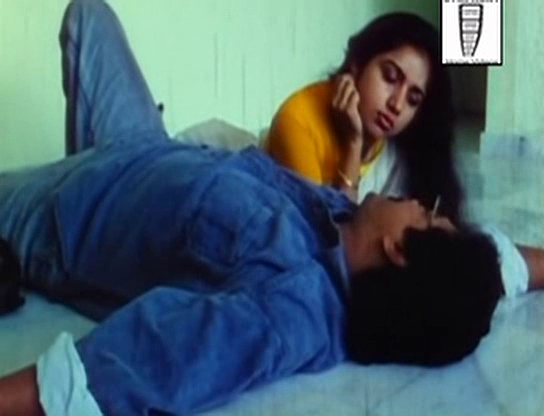
BaluMahendra-esque -- Thread 1
A 7000 word essay.
A Picture is worth ... know ?
Azhiyatha Kolangal (1979) - Shobha and Prathap Pothen
Moodupani (1980) - Shobha and Prathap Pothen
Rettai Vaal Kuruvi (1987) - Archana and Mohan
Vanna Vanna Pookkal (1992) - Vinothini and Prashanth
Marupadiyum (1993) - Revathi and Nizhalgal Ravi
Raman Abdullah (1997) - Easwari Rao and Vignesh
Julie Ganapathy (2003) - Ramya Krishnan and Jayaram
Subscribe to:
Posts (Atom)