Showing posts with label Tamil Cinema. Show all posts

Tuesday, December 24, 2013

Kalyana Samayal Saadham (2013)

Kalyana Samayal Saadham (KSS) picks an aspect of marriage that usually goes undiscussed in our cinema - impotency. Whether or not it is a permanent medical complication, a matter of sexual compatibility or a stress-induced temporary state can be attributed to detailing, but one could sense that the movie shunned away from topic through out its course the typical tamil cinema way. KSS chooses to instill humour into all the situations arising out and comically dismisses Raghu's (Prasanna) problem. When Meera (Lekha Washington) delivered the "Let's assume you are impotent, so what ?!" line, she appeared as if she was receiving the Tamil-culture-girl baton directly from Vadivukkarasi of Kanni Paruvathile (1979). The detailed procession of the wedding through the second half of the movie is probably a black critique on the system of arranged marriages - the unimportant modus operandi taking the center stage while nobody seems to care about important aspects such as the one presented in the film - impotency of the bridegroom.


One can observe that the movie assumes an elitist and urban setting with the tamil brahmin wedding and a complete song featuring facebook template etc, but the issue addressed is definitely universal. I definitely felt a bit let down with the way the script tackled Prasanna's problem with no honesty or intensity, expecting a psychological study of the problem in the context of a relationship. But the movie still deserves credit for bringing such topics into discussion, considering the mindless escapist stuff dished out in the name of mainstream entertainment in tamil cinema.

Wednesday, December 26, 2012

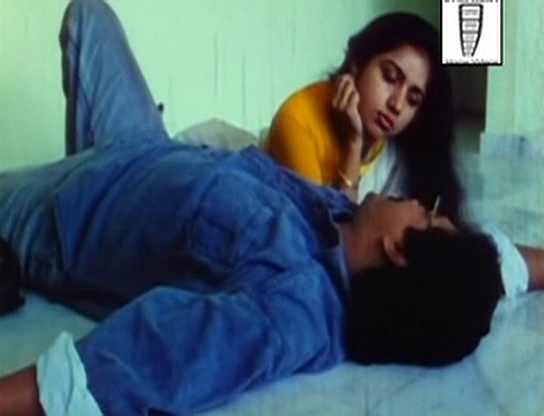
Indhu (1994), Prabhudeva and the 'Gaana' genre

The title, I realize, sounds a bit presumptuous but this is not going to be a comprehensive post on the Gaana music or Prabhudeva. I just set out to register things that struck me while I was checking out the 1994 Prabhudeva starrer 'Indhu'.

It can be safely said that I was drawn towards the movie purely by my nostalgia for its songs, otherwise the movie's plot is so awfully all over the place. Youtube watching of all the song videos would have sufficed !. Deva's album for Indhu has a special fascination for me, I have very vivid memories of listening to them as a 8-9 year old and I knew all those lyrics by-heart back then. We were living in a close-knit neighborhood those days and our neighbor with a tape recorder played the album so many times that i practically sang along those lines with the speakers all the time. I remember that my mom always disapproved me of singing those verses aloud and now I understand why !. References to female body & sexual overtones are an essential feature of all the songs in the album. Almost all the songs in the album (except may be 'Metro channel') can be categorized under the filmy Gaana genre.

'Gaana' as a musical genre was born in urban slums and it even has a certain plausible dalit origin. When 'Gaana' songs made it into the cinema, they were tempered a bit to suit mainstream consumption. Even on that level, Vaali's lyrics for Indhu's album are so much over the board (pointing 'mainstream' again) making misogyny in filmy gaana an understatement. A few examples would be 'Ulla theriyum Nayudu hall', 'back a paatha bens car', 'nellu kutha edam kodutha maatikkuva oralukulla' etc. Films usually had one gaana song, usually shot as an item number but with so many gaana songs in the album, Indhu gains a representative significance. I think tamil cinema is well past its gaana glory .. gone are the days of Deva, the most prominent filmy gaana composer of the 90s.

Going back to Indhu the film, somebody should have been thinking of a good launch vehicle to sell Prabhudeva's excellent dancing abilities and forged together this particular film. By 1994, 'Chikku bukku Rayile (Gentleman)' and 'Lalaakku dol dappi ma (Suriyan)' have made Prabhudeva a familiar face among the tamil audience and hence somebody was encouraged to really invest in a whole movie selling his dance repertoire. 'Indhu' is his first movie in a lead role and he had a decent acting career to show off following this film. If we were to put in some kind of detailed research into all those songs that Prabhudeva danced to, we might be able to theorize the (urban ?!) youth culture of the 90s in Tamilnadu. More than Rajinis, Kamals or any other film stars during his times, I think these will offer a lot of insight in that direction. Just think of the long list we will have - Indhu, Raasaiya, Mr Romeo, Kaathalan etc. I also always thought his dance moves carried a certain trashiness (can't put forward with a better word - i actually mean inelegant), they were quite fast & hence difficult to follow, may be they were choreographed intentionally to be inimitable, at least in the most famous numbers that i could recall he wore baggies or lungi-pattapatti combo when he danced. I would like to associate these with the specific audience his songs (and movies) addressed, thereby pointing again to the youth culture of the 90s.

Saturday, October 6, 2012

Collector sir ...


Thalapathy (1991), Mani Ratnam

   "motham aruvathu naalu case ... Devaraj melayum ... Surya melayum"

Thus began the most impactful scene of Mani Ratnam's Thalapathy (1991). The scene was the first meeting between the new district collector Arjun (Aravindswamy) and the mafia kingpins Surya (Rajinikanth) and Devaraj (Mammooty). It is a clash, a conflict, a contest, all of friction and tension - spectacularly shot, directed and enacted - it was just impeccable. 

The scene assumes a temporary harmony when Surya starts explaining his point of view in a composed tone. 

"Collector sir, neenga eppovavadhu ezhaiya irundhirukeengala ... ?"

And then hostility starts to build up in subsequential exchanges and the conversation reaches a clear break-down when Arjun declares in all his capacity ...

"Unga katthalukku indha oor jananga bayapaduvanga, naan bayappada matten"

Surya's "thodra paakkalam" outburst not only gives an idea of the inflammability of the whole exchange but also suggests like the tip of the iceberg, the whole rivalry that might ensue. As predictable in tamil cinema conflicts, the individual has to rise above and counter the system (police, government, administration, feudal setups). This scene is a definitive illustration of this recurring individual-larger-than-system theme in tamil cinema. 

The scene was like a stunningly written prose, well constructed point by point, arguments built-up step by step, camera probing from face to face capturing the clash of the egos in all details, reaching the crescendo with that masterclass from Ilayaraja.
"niruthanum ellathayum niruthanum ... MUDIYATHU"
It was a collaboration of the geniuses of their crafts - Mani Ratnam, Santosh Sivan, Ilayaraja, Rajinikanth, Mammooty, Nagesh and Aravindswamy. The result was simply magnificient and thus Aravindswamy became one of the lasting impressions of the image of an IAS collector as far as tamil cinema is concerned. There are others too !!

Iraniyan (1999), Vincent Selva

 Surya Vamsam (1997), Vikraman

Thevar Magan (1992), Bharathan

 Indira (1996), Suhasini Maniratnam

Monday, August 13, 2012

Madhubana Kadai (2012)

Madhubana Kadai (MK) transcends the conventional tamil cinema narrative, as in it doesn't have a form - it holds no premise, no beginning, no building-up of a plot, no interval cut and no climax. The characters emerge from nowhere and then they are lost in some time, of course apart from a few who occupy the entire script. The script works more like, the dirty wine shop with its alcohol supplies, is the central character and the people who visit it are peripherals at the most. In the hindsight, it looks like it could have worked only this way. 

MK had a lot of Bala-esque scope for instilling emotions and drama, but it decided not to. It takes no moral stance and it's no propaganda engine, the most it did is to disperse several satirical elements which can be labelled "political" statements. The film is set in Erode-Perundurai locales and shows in heart and blood, a single day in the life of a TASMAC wine shop. The wine shop is visited by people from all walks of life and occupations and is the center of a lot of political discussions, social skirmishes, drinking as social status elements etc. 

The tamil society (big cities should be exceptions) with all its self-righteous moral-policing is still devoid of genuine social hang-outs. That is where the relevance of so many cinema halls and TASMAC outlets emerge. Cinema theaters and toddy shops are the only centers of catharsis (in the sense of emotional outlets) for the working class (Women are limited to only cinema and neighborhood gossips I suppose). Hence these are centers of social equality, that even the all-pervasive casteistic hierarchy has to stay away from them. The film quite correctly references this as "Samarasam Ulaavum idame". MK is the confluence of cinema and liquor in that sense.

For me, the last three minutes of the film made a huge impact out of nowhere. It featured the social angst of a dalit sewage drain cleaner in quite some details. I mean, I don't remember the last time a main-stream tamil feature film spoke about this issue. The scene was quite inconsequential from the script's POV but it did make a profound political statement. That is why this film is special, it didn't attempt to have an agenda but then made a spontaneous go at issues like this. A second viewing would certainly help I suppose.

MK makes a mockery of the drinking culture in a typical tamil society. TASMAC is one of the largest money spinners and is a source of humongous revenue for the state. When the state handles the alcohol industry, it becomes just another object of political & monetary greed and the film rightly presents the case of "duplicate liquor" and gross mismanagement of the infrastructure of the industry. Drinking is thus not a source of bacchanalian pleasure here as it should be.

PS: The film is inspired by this Nanjil Nadan essay (as in the credits), which offers a brilliant read.

Tuesday, June 19, 2012

Vazhakku Enn 18/9

Not a review - Some random thoughts.


 Vazhakku En 18/9 (VE) ends with an epic climax - Jothi splashing caustic acid on a police inspector's face in the court premises. The scene symbolizes, in addition to many other connotations, the well-channelized angst of a commoner towards the system (law & order and the judiciary). This is quite characteristic of the late 70s and 80s Indian middle cinema of say - Mrinal Sen, Govind Nihalani or Shyam Benegal, wherein the common man questioning the system had frequently been the central theme. One such instance stand out for me - almost forty years back, Shyam Benegal's Ankur (1974) ended with a scene that is marked as the beginning of Indian parallel cinema. It had a young boy pelting a stone at a glass window and running away as the sound of the shattered glass resonates in air. It was remarked as the first stone of resistance against the casteistic and feudalistic setup of the neo-socialist India (of the 60s). VE definitely makes a more harsh statement - with acid.

VE vividly reminds us of the ground reality about the "existence" of two Indias - of the have's and the have-not's, the privileged and the underprivileged, the rich and the poor. The political and social institutions of the country have always been the center of conflict between the classes. VE features two love stories, both of them confluence at some point in the judicial system.

My last point would be on the so called disintegration of the "existent" ethical/moral fabric. It is very easy to point fingers or to moral-police, being critical of the technology or the next school going generation but that would be a terrible shortsightedness. To be brutally honest, for somebody who completed schooling just seven years back, I was shell-shocked to see that school going boys use mobile phones and film their girl classmates. I tend to think that there has been this disconnect between education and character building, somewhere in our schooling system. While our system will keep churning out engineers and mathematicians, the sociological aspects of our education badly needs some repair.

Tuesday, June 5, 2012

The Love metric

"Aambalaikkum Pombalaikkum" track from the tamil movie "Kazhugu (2011)" offers a metric to appreciate the state of affairs of romantic relationships in a society - the number of suicides (resulting from "love failures"). The more the number of suicides, the better it seems.

Shocking it may be, the lyrics actually read ...

காதலெல்லாமே ஒரு கண்ணாமூச்சி
இதில் ஆணும் பெண்ணுமே தெனம் காணா போச்சு
காதலிலே தற்கொலைகள் கொறஞ்சே போச்சு 

Our cinema always relished opportunities to idealize/idolize human emotional exchanges like boy-girl romance (Vikraman films for example), marriages, friendships (Thalapathy, Karnan for bromance), brotherhood, fatherhood, motherhood, thaai-maman (Kizhakku Cheemayile quite obviously) etc. This usually rendered a lot of scope in beefing up the melodrama and the hero delivering monologues romanticizing whatever that came on the way. They did demonstrate a definitive framework/blueprint on how any relationship should look like. While it can be argued that they are reflective of the collective ethic of the society, I have a feeling that our cinema always went overboard. 

Limiting our discussion to only the boy-girl relationships, it would be interesting to observe how our cinema is going to evolve portraying them from here on. We agree or not, there is already a certain degree of "westernization" or we may call it "pseudo westernization" in place, in our societies (well may be, the metropolitan cities only or the IT sector only). This might gradually change the way we perceive relationships and at some point our society (as a whole) will come to terms with the existing notions of "true love" and "successful marriage". In a land where Lord Ram, Devdas and Ambigapathy are the folklore, there is a certain fixation with the current values system espousing ideas like "divine love" and the whole "kallanaalum kanavan" discourse (for marriages). These simply result from the fact that we tend to give more importance to the status of the relationship  than to the happiness of the individuals who are a part of it. NO, I am not judging which one is better - Just read it as an observation.

As the society evolves, our movies will evolve or the other way around is also possible. Two recent movies will settle the discussion i suppose. First - "Vinnaithaandi Varuvaaya (2010)" idealised the relationship, it pretty much romanticized the obsession. Second - "Leelai (2012)" set in Chennai IT circles, the protagonist is quite a girl-chaser and dabbles with many a relationships before settling into one. 

A very confused post I would say, I was lost analyzing the relevance and political correctness of stuff I mentioned. I think if somebody gets a bigger picture of what I have been trying thus far, that should make my day.

Thursday, May 24, 2012

BaluMahendra-esque -- Thread 1

A 7000 word essay.
A Picture is worth ... know ?

 Azhiyatha Kolangal (1979) - Shobha and Prathap Pothen

Moodupani (1980) - Shobha and Prathap Pothen

Rettai Vaal Kuruvi (1987) - Archana and Mohan

Vanna Vanna Pookkal (1992) - Vinothini and Prashanth

Marupadiyum (1993) - Revathi and Nizhalgal Ravi

Raman Abdullah (1997) - Easwari Rao and Vignesh

Julie Ganapathy (2003) - Ramya Krishnan and Jayaram

Thursday, July 28, 2011

Movies, Cinema Posters and Cut-outs

Vaasanthi writes in her "Cut-outs, Caste and Cine stars".

The old lady opened her eyes and looked out from the window of her air-conditioned car. "What are all those dear?", she inquired about the figures that dominated the skyline. 
'Oh, those are cut-outs, Mother', said the official lightly.'Cut-outs of our chief minister.' 
Mother Teresa craned her neck and looked up at the sky. Jayalalitha's head was hidden among the clouds. 
'Good heavens,' said a shocked Mother Teresa, "it's so huge!" 
Her escort was amused by her reaction. 'Have you never seen such cut-outs ?' she asked. Still watching the passing parade of cut-outs, Mother Teresa replied, 'No, nowhere in the world.'

Cinema wall posters and cut-outs can arguably be regarded as "unique" cultural symbols of South India, more particularly in Tamilnadu and Andhra Pradesh. These should probably be the only states (in the world) wherein cine-stars contested elections after starting a political party on their own and went on to become chief ministers of their states. In that sense, Cinema assumes an important part of the social lives in these societies and hence Cinema posters will have an all pervasive presence. Cinema posters in movies provide a curious reminder of this ubiquitous presence of cinema posters in tamilnadu. 

A few observations on this ..

A "shot" of the cinema posters in movies, many a times, convey or summarise the mood or course of the film. 
In period films, cinema posters are an "essential" prop to re-create the social atmosphere of the yesteryears. 
M.G.Ramachandran and Rajinikanth are probably the most represented stars on the cinema posters (in movies).

Over to the Photo essay.

Iruvar (1997), Mani Ratnam

Thavamaai Thavamirunthu (2005), Cheran

Veyil (2006), Vasanthabalan

Thotta Chinungi (1995), K.S.Adhiyaman

Subramaniapuram (2008), Sasikumar

Mouna Raagam (1986), Mani Ratnam

Phantom India (1969), Louis Malle 

Mannan (1992), P.Vasu

Aan Paavam (1985), Pandiyarajan

Suvar Illadha chithirangal (1979), K.Bhagyaraj

Vaaranam Aayiram (2008), Gautham Menon

Boss Engira Baskaran (2010), Rajesh

Vinnaithaandi Varuvaaya (2010), Gautham Menon

Friday, June 10, 2011

On Vijayashanthi and Bhavani

The cult of Vijayashanthi is one of the lasting movie-going memories that I carry from my childhood. I have vague remembrances of watching several Vijayashanthi flicks with my mom and Vyjayanthi IPS [1990] is one of them. It was dubbed from the telugu movie Kartavyam [1990], for which she had won the National Award and this was supposedly the earliest movie in which the "Action heroine" tag was associated with her. 


Vijayashanthi's on-screen persona (which she successfully extrapolated towards her political career later) should have been constructed with a detailed strategy, taking into account, the existent social norms and gender dynamics in the late 1980s. In an outright patriarchal society where all authority is vested in men, a powerful woman on-screen (who can thrash men aside) naturally enthralls the female audience. Further, in the Police officer roles she enacted in Vyjayanthi IPS et al, her characters were packed with double the power-quotient, in a sense. At one level, it puts her across as a brave and physically sound woman who is not intimidated (or controlled) by the males. Secondly, the "power" that is inherently associated with the police - with which she audaciously "controls" the proceedings. 

Additionally, in the film promotions, Vijayashanthi was referred to as the "Lady Super Star", which again has some hidden sense. In the tamil cultural context, Super Star refers to Rajinikanth who can be seen as the macho symbol and on those lines, she is thus glorified as the lady with masculine traits. The Rajini-Vijayashanthi starrer Mannan [1992], exploited this association quite successfully.

Was watching (fast-forwarding) the Sneha starrer Bhavani [2011], which fails miserably because of one simple reason - it's not contemporary. A remake of Vyjayanthi IPS after 20 years won't work.

The film had an interesting catch though - instead of suggesting the "power" of the female protagonist symbolically or with her police attire, the film explicitly apotheoses Bhavani, thus combining two different genres of tamil cinema - the "Amman" cinema and the "female cop" cinema.


Image1: Bhavani's image is juxtaposed with that of big-mustached Karuppa Saamy (male deity).
Image2: Bhavani calls herself the Parasurama (One of Vishnu's avatars - male deity) with the axe.
Image3: Bhavani as the female goddess.

Saturday, May 28, 2011

On Keezhvenmani, Thirumangalam and Banganapalle

On one of those random scans through Kamal Haasan’s Virumaandi (2004), I was curiously captivated by the following short conversation that takes place between Sub-jailor Peikaaman (played by Shanmugharajan) and Dr.Angela Kathamuthu (Rohini), just before Virumaandi (Kamal Haasan) is brought for the interview, approximately 58 minutes into the movie.

Virumaandi (2004)
 (the conversation in tamil)

பேய்க்காமன்: மேடத்துக்கு தஞ்சாவூர்னு கேள்விப்பட்டேன் .. ப்ராப்பர் டேன்ஜூர்ங்கலா ? 

(Angela puts her pen down and with an assured look towards Peikaaman says Keezhvenmani) 

ஏஞ்சலா: ப்ராப்பர் இல்ல ... கீழ்வெண்மணி  

(As Peikaaman is noticeably jolted by Angela’s reply, there is a noise of opening of the door and Virumaandi enters)

With respect to Keezhvenmani, the film’s context doesn’t offer anything beyond this conversation, but the term per se, holds a lot of socio-cultural implications.

Keezhvenmani, a village in Nagapattinam district in Tamilnadu, shot to the national limelight (25th December, 1968), when about 44 dalits were burnt alive locked in a hut, in a wage dispute between the landlords and peasants. Keezhvenmani massacre, one of the most horrendous genocides in the post-independent India and a national shame, was not covered in all diligence in the mainstream media and the then Annadurai government is accused of blacking the issue out. The representation of Keezhvenmani massacre in popular culture – cinema, novels etc is also considered inadequate and dishonest. A couple of important novels (Kuruthipunal and Sennel) were written on the subject and Indira Parthasarathy’s Kuruthipunal won the Sahitya Academy too.

Keezhvenmani massacre (25th December, 1968)

If someone has to look through the annals of tamil cinema on representations of the Keezhvenmani massacre, we might end up with Aravindan (1997) and Nellu (2010). Both the above movies were not even quoting the name of the village and hence end up as dummy portrayals. Aravindan made a joke out of it, depicting the whole thing in the first 15 minutes and went ahead with Sarath kumar heroisms. As I see it, only Kamal Haasan was bold enough to atleast quote the name of the village – Keezhvenmani, in Virumaandi (2004).

Disregarding the representations in cinema and novels, the Keezhvenmani uprising is a social churning representing dalit assertion towards social justice. It’s a symbol of the struggle against social, cultural, economic and all possible forms of oppression and exploitation and that is what is being constructed as a part of Angela’s character in Virumaandi (in the form of an intelligent and independent woman). Angela later recounts how she became Angela James and then Angela Kathamuthu again, to Virumaandi and this will suggest that she was exploited as a woman (domestic violence probably) in her marriage. Or, it can all be too simple ... Angela wields her dalit identity with pride and a self-assured aggression.

Likewise, Thirumangalam (Madurai district) made it to the political glossary after the assembly by-elections in 2009. Infamously referred to as the “Thirumangalam formula” patented by DMK’s M.K.Azhagiri, Thirumangalam henceforth might be used as the symbol of money-power in “buying” out votes. I think the mainstream media, including Jaya TV has already used the phrase “Thirumangalam formula” (the whole Jananayagam and Pananayagam discourse) during the 2011 assembly polls propaganda.

We can probably come up with various other expressions like the above – the name of a place being suggestive of something else in the popular culture - like Auschwitz (holocaust, concentration camps etc), the former USSR (Communism), the Tajmahal (love), Tihar, Mecca etc. The USSR-Tajmahal reference is obviously from Kamal’s Anbe Sivam.

On a lighter note, the bubbly Hansika Motwani is addressed as Palli-ye, Banganapalli-ye in the “Nangai” song from the movie “Engeyum Kadhal” and Banganapalle is the home of a famous variety of fleshy and tasty mangoes. :)

Sunday, May 22, 2011

National Awards - 2010

Aadukalam, when it bagged about six National awards including the "Best Director" at the National Film awards last week, reinforced the legacy and value of Director Balu Mahendra in the Tamil filmdom. Balu Mahendra, for all his genius was one of the most uncelebrated and unappreciated figures ever to grace tamil cinema, in his days. His Cinematographic legacy - the beauty with which he caught those empty living rooms in natural lights - would live on those reels forever. More than that, his proteges - Ameer, Bala, Vetrimaaran, Ram - who now form an eclectic band of celebrated directors of today's tamil cinema (with three of the above four having won National Awards for their films), articulate his name aloud. They are giving him frequent "ஈன்ற பொழுதில் பெரிதுவக்கும்" moments. For the sheer efforts which Balu Mahendra has put in transferring his cinema and artistry to his proteges, he is right at the top as an all-time great - ahead of even Mani Ratnam or K.Balachander.

Aadukalam, doubtlessly was a mainstream product packed with more commercial interests than auteuristic sensibilities. Roosters are outright Phallic symbols in any possible cultural discourse and Aadukalam, exhibiting several ethnographic detailing on those lines, would have been one of the reasons why the film is given so much critical attention at the National Awards. Dhanush, winning the "Best Actor" only surprised a lot of people, keeping in mind that Aadukalam was not even Dhanush's best performance. In a retrospective scan through his career, Dhanush has packed his powerful performances in may be, "Kadhal konden" and "Pudhuppettai" and this award should hopefully foster the capable actor in him. 

For me, the biggest surprise was Saranya bringing home the Urvasi award for the sixth time. For an actress, who is well past her prime, doing character-centric mother roles - this is definitely an achievement. Saranya, for me, is one of those very natural performers with almost zero stage consciousness, acting out her parts with a stunning ease. Her Kongu origins is probably making me feel that she can very easily connect and emote with the audience. Saranya was not a very successful actress in the first half of her career - she always appeared deglamourised and in a masala-cinema era dominated by her male counterparts, she was permanently sidelined like any other actress those days. Her best performances undoubtedly came in her second innings - "Thavamai Thavamirindhu", "Raam" and "Kalavaani" stand out. These days, her amma roles are over-stuffed with a serial-like melodrama but the finesse she brings to her histrionics is evident - she is a standout performer.

And, finally the Dada Saheb Phalke arrived to grace the grand old man of Tamil Cinema - K.Balachander. KB emerged in the mid-sixties and was very much productive throughout his career in terms of the film outputs - he directed over 100 films which will probably stay as a record forever. The Gender dynamics that K.B dealt in his films in the late sixties till Mid-seventies with an unprecedented boldness should have literally shook the existent norms and taboos of the society (atleast what is being portrayed in cinema). But, he looked like he was caught in that time warp - the obsession that KB had in those relationship complexities and the middle class working women plots - he could never come out of it. That way, he never looked contemporary in say, the late eighties and thereafter. He would also be remembered as the man who sculpted two stalwarts of their era - Rajinikanth and Kamalhaasan.

Thursday, February 10, 2011

Myshkin's Yudham Sei

Myshkin is consciously working towards positioning himself as an auteur (atleast semi-auteur) in the tamil filmdom. All his films so far, were able to garner a decent commercial as well as critical acclaim. His films, though are flawed in several aspects, are constructed with a conscious rationale. His storytelling with "symbols" and innovative (read as abstract) shots only resound his potential. Even with flawed cinema, the relevance of his works is very much justified in the present day tamil cinema.

Tamil Cinema's confrontations with issues related to love and lust are here to stay. Myshkin however supplies a novel theme to this filmdom to exploit & abuse the already-pounded-to-death female sexuality - the peepshow. We are not exactly sure if this so-called "peepshow" is so much rampant in a normal Indian society but, when people (film directors) are on a search to bring in a new act of sexual perversion/ sexual deviance to garner that ever-important exploitative value to their films, days are not far, for Necrophilia to be treated in a tamil cinema. With so many films on gender, sexuality, exploitation, rape, karpu - so much of opportunity has been lost in communicating any kind of mature feminist perspective and again & again, it boils down to adultery - justification-for-revenge - lectures-for-audience dramas.

Yudham Sei is a crazily convoluted movie (probably with an intention). For about three-fourths of the runtime, you are anxiously trying to assimilate the big-list of names, facts and details that are thrown at you - Rajamanickam, Thirisangu, Isakimuthu, Moorthy, policemen, commissioner office, auto-driver, dance-class etc. Is everyone in the audience a CID officer ?. Cinema works with the audience as they identify - the character, his/ her name (if neccessary), the actor who play the character - all the three. When you get introduced to a character via a dialogue only, that "association" goes missing and hence, instead of getting involved with the narrative, you keep thinking who-is-who ?. There is a difference between "gripping" and "confusing", In both the cases, the audience will follow the narrative closely. There is simply so much of action going on - A couple of crime investigations are on, several pairs of amputated hands were displayed in public places on carton boxes, girls go missing, Cheran is roaming around like a loser, his sister is also missing, film is shot in the night time, auto drivers, several oldmen discussing "show" etc etc. "Yudham Sei" is confusing (before everything will be clarified in a flashback and you have to correlate all the facts in a jiffy).

Cheran who started out as a very reluctant actor in his "Autograph" has grown comfortable in front of camera these days. The characterization of J.Krishnamoorthy (with an obvious reference to philosopher Jiddu Krishnamoorthy) as a CID officer tries to break every possible aspect with which such characters will be stereotyped in our cinema. He is not athletic, he doesn't walk with a robotic precision, he doesn't deliver lectures on his commitment to the "department" and more importantly he is not thrashing the baddies in air. Infact, in the only opportunity that J.K is provided with to "fight", he uses a small nail-cutter to outsmart about eight people who were armed with daggers and jacksaws. That was one wonderful action sequence, one to remember definitely. The build of J.K's character with so much of emotions has come out spectacular - J.K is an ordinary man, he walks and feels like a loser, he is crestfallen in most of his screen-space, he speaks little, he runs instinctively, he is so much attached to his sister - so many dimensions - Cheran just performs with a definiteness.

Dipa Shah (Thamizh) who plays an assistant to J.K., looks more like Andrea Jeremiah (in the movie). Thank God, she hasn't fallen in love with J.K in the movie. Infact, there is a dialogue in the movie which will state that J.K is still a bachelor and so you will naturally expect her to "fall" in love ... luckily, she didn't. Jayaprakash, who is identified as the nextgen Radharavi/ Nasser/ Rajesh overacts and spoils the broth in many a places. As he (Judas) harangues at you with an artificial aggression (in a close-up), "What would you do, had your sister or your girl been sexually assaulted like this ?, will you not chop him into pieces ?", you only want the credits to roll on and the curtains to fall down. 

YG.Mahendran and Lakshmi Ramakrishnan are unbearable with exaggerated emotions and according to me, are terrible miscasts. Shaved heads, black uniforms, open-wide eyes, machine-like walks after getting stabbed and shot - irritation all the way - violence is something that these two people (YGM and LR) can't communicate. Simple.

A few more things I would want to mention:

- The victims are tortured in a Saw-esque fashion
- The victims are "selectively" tortured - either eyes or hands or xyz - Garuda Puranam ?
- Judas (Jayaprakash) call "them" Devadhaigal .. why ?
- All Myshkin's item-song sirens are dressed in a yellow saree .. why ?
- the peepshow - Waterbed, Rose petals, BDSM, Grape pool, bondage - so much creativity !

Sunday, December 19, 2010

Easan - some thoughts ...

So many spoilers !

Easan, for the most part, expresses the wrath and fury of Sasikumar towards the city youth and the pub/ discotheque culture. We couldn't quite ascertain if it is "personal" but the kind of turbulence with which the title character Easan is charged with, stands proof for the above. As Easan clobbers Chezhian's (Vaibhav) head and spine with a huge jack hammer/gear rod or whatsoever, you feel that chill down your spine and that moment summarises the movie for you. Sasikumar's eye in detailing blood/gore/flesh finds an expression in Easan too. 

There is a very natural dimension to the political/capital power - the contagiousness. A mere existence in its environment is sufficient enough for one to fancy power. Yes, I am very much referring to that tricky and elusive feeling - being the son of a big-shot, be it a big businessman or a politician, affordable only by the Mallyas and Marans though. It's something that has been exploited to a good extent in rendering a dramatic value to the script, with the characterization of Chezhian and his dudeism. That said, the acting and the dialogues in these areas are pathetic - the dudes are not cool and the dialogues are very artificial. The dudes could only manage constipated looks on their faces, trying to project themselves as ultramodern studs. 

Easan, in the first half, exhibits a lot of promise, picking up a lot of engrossing stuff on it's way - business lobbying, corporatisation of politics, politicization of business, the night life in Chennai, a helpless and desperate policeman etc but when it all boiled down to an individual vendetta in the second half, you just feel a bit let down. Many a scenes hang in the air when you try to sync the first and second halves of the narration - especially, the Vijay Mallya stunt. Still, the aspiration itself, to depict the nexus between business and politics, is very much valid and appreciable. A couple of interesting diaogues were floated upon, during the conversations between Deivanayagam, the politician and Shivaraj, the businessman.

Abhinaya - being a handicapped woman, there has been (or will be) an intentional bias with which Abhinaya's performances has been (or will be) approached, which kinda makes sense. There will always be a "constant of integration" summed up with her personality while evaluating her performances. She plays a mute girl who becomes a rape victim in the movie. There is always a serenity and gloominess in her face even during the "happy-family" sequences. There is a fundamental dynamics based on which the anti-hero/villain & victim characterizations are constructed in movies - the differentiation in characterizations - they will be portrayed as completely alternate psyche's. The victim, who is a woman almost all the time, will be an embodiment of good virtues and will be associated as somebody who is pure, divine and beautiful.  The anti-hero/villain will be presented with a sharp contrast with the former - with an unconventional/ awkward face, stern/rough voice, drinker/womaniser etc. To put it simple, the victim is 100% good and the offender is 100% bad. This is very important so as to invoke an intrinsic sympathy from the audience and to justify the hero's final combat with the villain. The victim's character need to be very strong to reinforce this and the quintessential examples of this phenomenon are Sridevi in "Sigappu Rojakkal" and "Moondru Mudichu", Ashwini in Uthiripookkal, Shobana in Mahanadhi etc. Abhinaya's character in Easan is one such portrayal.

There is an age-old sacred rule in tamil cinema - with respect to the physical assault on the female protagonist or any female character for that matter - Any degree of verbal or physical   aggression on the rapist is simply justified by itself. In a patriarchal society, where all the socio-economic powers are vested with the men, men intentionally attached a "larger-than-life" importance and sanctity to the virginity of a woman. It not only helped men confine women within the houses but also let men free of these rules. Easan is the latest entrant reinforcing this social psyche - all those horrendous flesh-mashing by Easan on Chezhiyan is justified by itself.

That Sasikumar is severely critical of the pub and discotheque culture is evident at many places in the film. During the first half, the camera spins into a pub every tenth minute and it's a kind of condescending outlook that Sasikumar stamps on the western way of life and the modern youth. DJ, drugs, lust, moral degradation is all he portrays. Contrastingly, in a true Mahanadhi style, he shows how the life in a village is so calm, peaceful and satisfying in a flashback narrative. And, the "Nattar theivangal" are to be seen extensively in tamil cinema these days. It provides ample scope for detailing in a village atmosphere for the film makers. Vamsam did a whole lot of it recently and Easan budgets a good deal of time for the same.

The film also reinforces the healthy chemistry between Samuthirakani and Sasikumar. Still, what Easan lacks, for me, is that clarity in narration and good performances. For atleast the first half of the film, you keep yourself engaged in trying to identify the direction of the drama - you simply can't single out a protagonist-antagonist pair. Though its not mandatory to have the same, it has been the way our cinema has worked all these years and on the negative side, it will only diminish the curiosity that the audience has on the narration. You follow the engrossing drama on-screen and realise that Chezhian is a dude, Sangaiyah is the frustrated but helpless policeman, Reshma is a good looking babe, Deivanayagam is a kingmaker politician etc. But, that "so-what, what-next" feeling lingers. 

Sasikumar commands a good fan following for himself which itself is a healthy trend - fans for a film director sounds good .. right ?. Of late, he is being viewed as the Midas of the tamil filmdom - all his previous ventures - as director, producer and actor are all stupendous successes both commercially and critically. Easan would be a tiny speed-bump on his otherwise illustrious career so far. 

Saturday, October 2, 2010

Rajinikanth and his Endhiran


Not a complete Review.


Rajinikanth is not a mere mortal cinema actor - he is a fantasy, he is an emotion, he is an impact, he is an impression, he is an experience, he is a perception, he is a sensation, he is a marvel, he is a mystery, he is a phenomenon in himself. His movies are not mere 24 frames per second shot with a digital video camera - they are an event, they are a festivity, they are a celebration, they are a detailed revelry to be relished. The moment a Rajinikanth project is announced, Tamilnadu tunes itself for an extravaganza. Everything "Rajini" makes news - still releases, trailer release, audio release - anything Rajini is consumed upon with a reverent devotion and authentic enthusiasm, which only Rajinikanth commands. The fanfare and the mass adulation submitted at this particular individual will be relevant at only one context - Rajinikanth. The fundamental rules of cinema, its narrative structure, its impact on the emotional system of the audience, its effect on the psyche of the spectator - all these seem to work different in this context - Rajinikanth.

"Cinema from an Idea" and "Cinema around a star" - each work in a distinct manner. During the studio days, when independent cinema was a distant idea, the studios required some kind of assurance and minimum guarantee at the box office. This is where the relevance of the "star system" emerges, the idea of the fan clubs and fan devotion arises. In the panorama of the "star system", the way a film works with its audience is altogetherly different. The audience, first of all tries to establish a one to one relationship with his favorite star and only after this, the settings of the story and the actual cinema walks into him. The production houses encouraged this idea with mass publicity campaigns and the actors endorsed the "fan activity" in large scales. There is an important drawback with the system though - How-much ever effort a particular actor invests in his performance, the audience will always perceive the personality above the performance. Thus, the idea of "fantasy acting" packs the final punch and the actual acting in a puristic sense - the "method acting" loses out in the race.

Rajini's collaboration with Shankar has marked a significant departure from the star-fan dynamics that Rajini has set in motion somewhere at the dawn of his film career. Rajini as a star was an altogetherly new phenomenon in the tamil social milieu. Stars who garnered mass adulation in the previous generations like M.G.Ramachandran and M.K.Thyagaraja Bhagavathar had "attractive" physical appearances (in a conventional sense), their roles were tailored in such a way that at no point of time the audience will develop a sense of aversion or uneasiness with their behaviour on-screen. More importantly, MGR and MKT had a huge following and popularity amongst women. Rajini broke all these conventions when he emerged - he had a rough angry man look, his complexion was dark, he smoked on-screen for almost 100 movies, he did spine-chilling villainy when he set out as an actor - Still, he naturally was the toast of the town with his active prompts and charismatic styles. But, it was the subalterns and the masses who initially were the patrons of the Rajini phenomenon, his popularity and stardom among the elites and women was something that happened at a much later stage. Coming to the star-fan dynamics - it was a totally different ball game those days - Rajini mostly played an angry young man who stood for the people, he fought for the poor in a simulated feudalistic society, he smoked lavishly on-screen, his characters were developed with cues of misogynistic and male chauvinistic behavior (in many movies). The audience enjoyed everything he did on-screens ... those were the audience who inculcated a sense of loyalty and integrity in them towards their "Thalaivar" and were the first generation fans of Rajinikanth. 

Shankar has brought about a whole new shift in the way Rajini is perceived by his fans. Rajini stopped smoking on-screen (for a different reason though), he has started doing roles of a software engineer and Robotics scientist these days, he wears wonderful clothes, lives in rich bungalows - In all, he is portrayed as somebody whose standard of living is very high. This is in stark contrast with what Rajini has been doing all  his career. How many times before "Sivaji" have you seen Rajini trying to woo a girl in all those details ?, How many times before "Endhiran" have you seen Rajini running away with his girl as somebody (Kalabhavan Mani) chase him ?. We all knew Rajini who used to say, "A Man shouldn't be in pursuit of a woman" and "Thaedi vandha kadhal" etc, we only saw him thrash tens of baddies. This is the "image makeover" I am trying to convey. "Endhiran" was an all new standard towards this particular idea - "Endhiran" carries no identity of a "Rajini movie", no styles, no punch dialogues, no intro song with the message to the audience, no freaking introduction scene. Its a Shankar film, its a Sci-fi film, Period.

Over to Endhiran: More than Vaseegaran - the scientist it was Chitti - the Robot who garnered all possible attention and applause. Wickedness and Villainy are the real "bread and butter" of Rajini's histrionics with which he started with. He does villainy right from his instincts ( "Mottae boss" of Sivaji is one more example on this light ). It is because of this intuitive performance, Chitti's character has come out so well that it looks almost effortless. Mufflers, pronounced collars, bandages - the costumes to hide Rajini's ageing neck serve the purpose but still, Vaseegaran does look older especially when he is seen alongside with the vibrant Chitti.

In Sivaji, we had Vivek seen with Rajini all the time which kinda irritated. This movie is full of Rajini - the presense of either Vaseegaran or Chitti is guaranteed in almost every frame. After Chitti Version 2.0's arrival, there are more Rajini's - 100s of them all through the frame - Satisfaction. The dialogues discussing Fibonacci series, Neural schema, medical terminologies etc provide a scientific feel but the songs' lyrics were over-stuffed with science tit-bits, I feel. The train stunt sequence and the final animation spectacle were real long - warrants choppings. 

Though the film looks rich, I still can't find 160+crores on-screen. The "Machu pichu" song - "Kilimanjaro" was the most visually appealing. Resul Pookutty, AR.Rahman, the animation experts from the west, Rathnavelu - all are felt. 

The commercial value of Rajinikanth, the star seem to be on a rise, there's no waning of his star value in the recent future - If an individual can set in motion so much commercial activity, If a cinema star can guarantee so much excitement to so many people, why should he ever retire from cinema ?

One important critic on the big budget productions involving stars of the stature of Rajinikanth is that, it heralds the arrogance of "Capitalism" in cinema production. Just observe - one or two weeks before and after the release of "Endhiran", you won't find any high profile film releases - Who wants their film to be washed away in the frenzy that "Endhiran" generates. Calculations are on - 2500 prints * 4 shows a day * 150 rupees per ticket - How many days does it take for the "Sun Pictures" to gross all the money that they have invested in. With all the media under their control and the kind of intense promo campaigns that they can manage, its a juggernaut of influence that "Sun Pictures" manages over the creativity industry of the state. And, it is the small scale productions and indie ventures that are promptly crushed on the way. Arguments discussing "consumer driven economy" will ultimately project capitalistic undertones only - Quoting Rajini himself from Sivaji - "Rich get richer and poor get poorer".