Monday, July 2, 2012

Tut mir leid, Ich bin auch tourist ...

Not knowing the language and still being a part of the social setup, is a bizarre feeling. To be shut out of random conversations in local trains, not being able to help somebody who actually trusted you and asked directions to a place, not to be in a position to explain what you want while you shop at the super market, and above all - disability to imbibe the popular culture viz. magazines, news papers, cinema, theater, music etc - It's so awkward. The complexity of the language under question only bolsters my pessimism that I will never be able to keep a conversation in German in the near future. Sometimes I have this imagination that I am a hapless new-born totally unaware of what is going on around me, except for the fact that kids hear and lip-read so fast and master a language really quick. The perils of swallowing a language so late in life is the inability to "get" it in German (for example) without taking the English route -- (i.e) German word - translate into English - write into the memory, and vice-versa. The word-picking rate gets drastically down this way. 

There is a general tendency in us - In a conversation, when somebody discusses things with words that we don't know, it tends to turn us off and we start to perceive the conversation as "boring". Starting to learn a language comes with this warning - each and every word that a native speaker utters is going to be new and to actually fight that ineptitude and somehow boost the learning curve takes some confidence and eagerness. Recently I had this plan to inculcate that eagerness by feeding my imagination about German culture, history and sociology (Ostalgie and Vergangenheitsbewältigung, to name a few). To actually develop a sense of taste towards a language that is not your mother-tongue is not an easy thing. English with its all-pervasive nature and India with its colonial fixations got it into us even before we realized. To artificially drill German into one's self thus is a Herculean task. Being away from the mother-land for so long generally sickens the intensity of the nostalgia for my "own" language, "own" music, "own" cinema and "own" everything. Inability with German is just another conflict within the self.

PS: The title of the post means - "I am sorry, I am a tourist" (in German).

Tuesday, June 19, 2012

Vazhakku Enn 18/9

Not a review - Some random thoughts.


 Vazhakku En 18/9 (VE) ends with an epic climax - Jothi splashing caustic acid on a police inspector's face in the court premises. The scene symbolizes, in addition to many other connotations, the well-channelized angst of a commoner towards the system (law & order and the judiciary). This is quite characteristic of the late 70s and 80s Indian middle cinema of say - Mrinal Sen, Govind Nihalani or Shyam Benegal, wherein the common man questioning the system had frequently been the central theme. One such instance stand out for me - almost forty years back, Shyam Benegal's Ankur (1974) ended with a scene that is marked as the beginning of Indian parallel cinema. It had a young boy pelting a stone at a glass window and running away as the sound of the shattered glass resonates in air. It was remarked as the first stone of resistance against the casteistic and feudalistic setup of the neo-socialist India (of the 60s). VE definitely makes a more harsh statement - with acid.

VE vividly reminds us of the ground reality about the "existence" of two Indias - of the have's and the have-not's, the privileged and the underprivileged, the rich and the poor. The political and social institutions of the country have always been the center of conflict between the classes. VE features two love stories, both of them confluence at some point in the judicial system.

My last point would be on the so called disintegration of the "existent" ethical/moral fabric. It is very easy to point fingers or to moral-police, being critical of the technology or the next school going generation but that would be a terrible shortsightedness. To be brutally honest, for somebody who completed schooling just seven years back, I was shell-shocked to see that school going boys use mobile phones and film their girl classmates. I tend to think that there has been this disconnect between education and character building, somewhere in our schooling system. While our system will keep churning out engineers and mathematicians, the sociological aspects of our education badly needs some repair.

Tuesday, June 5, 2012

The Love metric

"Aambalaikkum Pombalaikkum" track from the tamil movie "Kazhugu (2011)" offers a metric to appreciate the state of affairs of romantic relationships in a society - the number of suicides (resulting from "love failures"). The more the number of suicides, the better it seems.

Shocking it may be, the lyrics actually read ...

காதலெல்லாமே ஒரு கண்ணாமூச்சி
இதில் ஆணும் பெண்ணுமே தெனம் காணா போச்சு
காதலிலே தற்கொலைகள் கொறஞ்சே போச்சு 

Our cinema always relished opportunities to idealize/idolize human emotional exchanges like boy-girl romance (Vikraman films for example), marriages, friendships (Thalapathy, Karnan for bromance), brotherhood, fatherhood, motherhood, thaai-maman (Kizhakku Cheemayile quite obviously) etc. This usually rendered a lot of scope in beefing up the melodrama and the hero delivering monologues romanticizing whatever that came on the way. They did demonstrate a definitive framework/blueprint on how any relationship should look like. While it can be argued that they are reflective of the collective ethic of the society, I have a feeling that our cinema always went overboard. 

Limiting our discussion to only the boy-girl relationships, it would be interesting to observe how our cinema is going to evolve portraying them from here on. We agree or not, there is already a certain degree of "westernization" or we may call it "pseudo westernization" in place, in our societies (well may be, the metropolitan cities only or the IT sector only). This might gradually change the way we perceive relationships and at some point our society (as a whole) will come to terms with the existing notions of "true love" and "successful marriage". In a land where Lord Ram, Devdas and Ambigapathy are the folklore, there is a certain fixation with the current values system espousing ideas like "divine love" and the whole "kallanaalum kanavan" discourse (for marriages). These simply result from the fact that we tend to give more importance to the status of the relationship  than to the happiness of the individuals who are a part of it. NO, I am not judging which one is better - Just read it as an observation.

As the society evolves, our movies will evolve or the other way around is also possible. Two recent movies will settle the discussion i suppose. First - "Vinnaithaandi Varuvaaya (2010)" idealised the relationship, it pretty much romanticized the obsession. Second - "Leelai (2012)" set in Chennai IT circles, the protagonist is quite a girl-chaser and dabbles with many a relationships before settling into one. 

A very confused post I would say, I was lost analyzing the relevance and political correctness of stuff I mentioned. I think if somebody gets a bigger picture of what I have been trying thus far, that should make my day.

Friday, May 25, 2012

European Union - An Outsider's view

Disclaimers:
The following write-up summarizes my impressions about the European union, on attending the Jean Monnet circle seminar series (ongoing) held at Karlsruhe Institute of Technology, Germany. Envisaged as a non-academic article, I don't guarantee factual and political correctness of the ideas expressed here.

It is always a daunting task to achieve any degree of "integration" in a geographically vast region encompassing various forms of diversity viz. language, culture, religion etc. The idea of European Union is very much a work in progress and it presents an excellent study-ground to observe possibilities of integration in a culturally pluralistic environment. 

The European Union (EU) had its seeds in the European Coal and Steel Community of the 1950s and was initially charted out to ensure trade co-operation between France and Germany. More importantly, its agenda was to effect peace amongst the European states after two shattering wars within a span of 30 years. As long as the idea of the union was business/commerce centric (such as the free market for goods and free movement of workers etc), it is an arguably successful model. But, when the union gave rise to other institutions such as the European court of justice, European commission etc, it very much touches the political, cultural and social lives of every citizen in the EU and hence might question the very existence of individual sovereign states in Europe.

Leaving aside the widely criticized "democratic deficit" in the institutions of the European union, the sheer power dynamics amongst the member states of the union should be discussed. It's an open secret that Germany (amongst other members) with its rock-solid economy enjoys an absolute political clout in the union. Germany's political stature in the union is inevitable but this accumulation of power with a single state will gradually lead to a situation where Germany (or for that matter, any other country or a clique of countries) dictates terms influencing common lives in the region. That will only pave way to a new form of imperialism - annihilating economic, cultural, social and linguistic interests of other states in the union. This is exactly the way British colonization worked - start with trade (East India Company in India, for example) and then increase spheres of influence. We can't rule out the possibility that the whole of Europe might be speaking German (or French or whatever) thousand years from now.

Another possibility might be the case where individual states of the continent can be forcefully affiliated to the union citing economic (or other) benefits. This might lead to a situation resembling the erstwhile Soviet Union, where states were either annexed or held by force, eventually leading towards disintegration.

As of today, the idea of a "unified Europe" can safely be considered to be in it's infancy, looking at the loyalties (or nationalism) of citizens towards their own countries than a harmonious "European Nationalism". This is quite explainable - Europe has been a war-torn region for a very good part of the twentieth century and hence overtones of cultural nationalism are expectedly dominant. A sudden shift in the loyalty towards a totally new political entity will not happen. But, if at all that happens it would be killing all indigenous cultures, languages, religions and other forms of social expression, paving way to a unified continent ("monarchia universalis") with nil diversity. On that day, there won't be German automobiles, no french fashion, no swiss watches and no italian art but the kind of political & economic authority that the EU will have on the rest of the world will be phenomenal.

To be optimistic for a change, India presents an amazing living example of a culturally pluralist state held together as a successful democracy for more than sixty years now. India as a single entity was a very fancy idea which was somehow successfully achieved integrating more than 500 princely states - diverse on all possible parameters. Many intellectuals predicted doom, Selig Harrison for example wrote in his 1960 book India: The Most Dangerous Decade, “the risk of India being split up into a number of totalitarian small nationalities”. But India survived (with many a hiccups though). Of course, the ground realities are different but the point is, it is not impossible.


Read more at: http://indiatoday.intoday.in/story/Tongue+tied/1/2692.ht"

Might be continued ...

Thursday, May 24, 2012

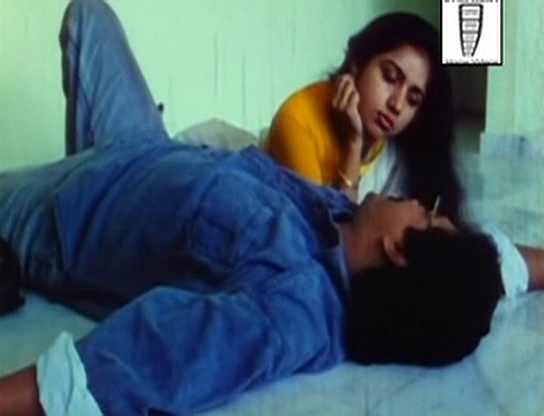
BaluMahendra-esque -- Thread 1

A 7000 word essay.
A Picture is worth ... know ?

 Azhiyatha Kolangal (1979) - Shobha and Prathap Pothen

Moodupani (1980) - Shobha and Prathap Pothen

Rettai Vaal Kuruvi (1987) - Archana and Mohan

Vanna Vanna Pookkal (1992) - Vinothini and Prashanth

Marupadiyum (1993) - Revathi and Nizhalgal Ravi

Raman Abdullah (1997) - Easwari Rao and Vignesh

Julie Ganapathy (2003) - Ramya Krishnan and Jayaram

Saturday, April 14, 2012

On Chennai Super Kings

A short take on the brand Chennai Super Kings (CSK), not much on their cricket.


Right from my university days, I have observed a clear polarity when it comes to the fan-loyalty for the Indian Premier league (IPL) - CSK fans (mostly tamil-speakers) and non-CSK fans who mostly aligned themselves to cheer for Mumbai (as though the remaining teams don't matter much). CSK has established itself into such a humongous brand that people who don't admire CSK have to find a real big cricketing monster to counter it. And, invariably they shield themselves with the stupendous career of the country's greatest cricket icon - Sachin Tendulkar. Sachin is probably India's greatest ever brand, may be after Gandhi, but CSK fans would want Sachin to get a golden duck if Sachin is marking his stance against a CSK bowler.

CSK, in my opinion has very carefully cultivated an image - as a pack of disciplined and professional athletes. When almost every other team had attractive actresses for the TV presenters to turn to, CSK's dugout had no eye-candy. I have seen CSK fans identifying their team as a "chauvinistic" bunch stating the above, but I think the point is CSK has it's cricket right and that there was no need for other crowd-pullers. Not tinkering much with the player composition every season is a very good culture that nurtures team loyalty. Sometimes I am terribly confused if I am watching Kolkata or Pune playing if Dada is up at the toss.

There was one striking feature in CSK's promo videos that are broadcast on FM Radios, Television or available at large on Youtube (like this, this, this) - Chennai's nativity. They have a very catchy and truly Chennai-esque theme like - "Whistle podu", "Six podu", "Raise your handsu" etc. A fair look at the promo videos would suggest how brand CSK connects with its fans - the videos are so full of life,  they are so full of Chennai. They are packed with so much of ethnographic details unique to life at Chennai - temples gopurams, cinema wall posters, beach, pookadai, teakadai, isthiri-petti, gully cricket, kolam, traffic, cut-out culture, dappanguthu, central station, autowallahs, street kids etc. The focus in these videos is not too much on the players who represent CSK but on the fan who cheers up for CSK. Also it features women of all ages portrayed as fans of cricket in general and CSK fanatics specifically. Showing a portrait of a 65 year old grandma with fingers on her lips whistle adichufying is something special - All these quickly establish the fact that CSK's brand of cricket touches all lives in Chennai - no bars on age, gender, social class etc. The visual culture presented doesn't feature any kind of "eliticism" and it all looks like a perfect amalgam of cricket and life in general at Chennai.

And then there is Dhoni whose aura as a leader is unsurmountable in the limits of IPL. It looks easy but the way Rajinikanth's film persona was blended into Dhoni's cricket persona ("podhuvaga en manasu thangam" score, for example) is something remarkable. This should be something unique to Chennai that might not work elsewhere in the world with any sports team or film star. 

Ofcourse, for a brand to sustain, the team has to perform and CSK delivers. It sometimes looks like many of us CSK fans take their performance on the field for granted.

Thursday, April 12, 2012

John Keats, Thangamani and High School English

I was struck by a very intense nostalgia on listening to the beautiful song "Innisai paadi varum" (Thulladha Manamum Thullum, 1999) this morning. Gonna try reproducing what I wandered through.

I had this poem "Ode on a Grecian Urn" (John Keats, 1819) as a part of the curriculum in our High school English paper and Mr Thangamani was my English teacher back then. I somehow exactly remember how he taught us this particular poem, picking up verses from one of the then popular tamil movie songs "Innisai paadi varum". It was the earliest instance of "Comparative Literature" I ever went through.

Heard melodies are sweet, but those unheard
    Are sweeter -- Keats

கண்ணில் காட்சி தோன்றிவிட்டால்
கற்பனை தீர்ந்துவிடும்
கண்ணில் தோன்றா காட்சியில் தான்
கற்பனை வளர்ந்துவிடும் -- வைரமுத்து

(Roughly translated as)
If reality meets the eyes, then imagination will come to an end. As long as the reality remains elusive, the imagination is alive. 

Thus Mr Thangamani explained the poem to us quoting Vairamuthu and this explanation has somehow stood the test of my memory so far. I just realize that, for me "Ode on a Grecian urn" was how Thangamani taught it to us comparing it with a popular movie song, more than anything else. I mean, I think that's the legacy a teacher can leave in his students, in the limits of a classroom. 

The above Keats' verse used to be a very famous ERC (Explain-with-Reference-to-the-Context) question that appeared in the exam papers frequently and I remember, I quite enjoyed explaining it. Even after graduation from a rigorous university curriculum, I can still say that - English Paper I in Tamilnadu's Matriculation board was the most "demanding" exam, I ever wrote in my life. In just about two and a half hours, we used to answer four essay type questions (each in about three pages), ERCs, short answers and a whole lot of grammar. I mean, it used to be a race with time to complete the paper, answering all the questions. We used to come out with aching hands, totally enervated.

Diverging ... 

Only for the sake of it, I reminded myself of the way we were forced to learn English in our High school. I think, language papers need to be taught in such a way that students look at the linguistic nuances and write what they "experienced", rather than reproducing things that are dished out on a paper or student guides. We were "trained" or "coached" to recite and write things by-heart than being "taught" to appreciate the aesthetics (of say a poem). I see it as one of the many fundamental flaws in our educational system. I definitely had a few teachers who were different and encouraged self-written answers even if it wasn't completely flawless and Mr Thangamani was definitely one of them.

In the hindsight, I could understand that there was a really clear dichotomy in the way science teachers and language teachers (Tamil and English) were treated by the school management back then. Because science and maths scores are going to land us into the professional courses at universities, there was/is a stigma that a high school's reputation is proportional to the science & maths scores it's students secure at the final exams. So, the teachers who taught language papers were treated with relatively less importance and respect by the school management and this attitude quite naturally crept into the students. That is probably the reason, why many of my friends didn't have a really good relationship with our language teachers.

I realize that this piece has wandered a lot (and enough) without any specific agenda, through my formative years at high school.